
Former Supreme Court Justice Abhay Oka warned that major cities might be forced to adopt mandatory face mask usage within 20-25 years due to environmental degradation. He stressed that protecting the environment is a fundamental constitutional duty, countering the misconception that humans own the Earth. Justice Oka also encouraged students to study law and use AI responsibly.
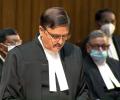
Justice Abhay S Oka, known for his unwavering commitment to liberty and constitutional values, bid farewell to the Supreme Court of India. In his final address, he stressed his dedication to upholding constitutional liberties, emphasizing that it was his "honest endeavor" to fulfill the dream of the Constitution's framers. He also expressed gratitude to the bar and his colleagues for their support and shared heartfelt memories from his time on the bench. Justice Oka's departure marks the end of a distinguished judicial career spanning over two decades, during which he served as a judge of the Bombay High Court, Chief Justice of the Karnataka High Court, and ultimately, as a Supreme Court justice.

The Supreme Court has agreed to list a review plea concerning its May 2025 verdict on the ownership of the Hare Krishna temple in Bengaluru. The original verdict had ruled in favour of ISKCON Bangalore, but a subsequent split verdict by a review bench led to the matter being referred to the Chief Justice for further directions. The legal battle involves ISKCON Bangalore and ISKCON Mumbai over control of the temple and educational complex.

The Supreme Court has appointed its former judge Hrishikesh Roy to act as ombudsman of the Bihar Cricket Association.
The Supreme Court has sought responses from the Maharashtra government and other parties regarding a plea to fell and transplant trees for a proposed National Centre of Excellence for Animation, Visual Effects, Gaming, Comics and Extended Reality in Mumbai's Film City. The project, deemed of "eminent national importance," requires the felling of 124 trees and transplanting 333, with compensatory afforestation planned. The court's intervention follows a previous order restricting tree felling in the Aarey colony.
In a landmark decision, the Supreme Court of India has quashed the 2021 Office Memorandum allowing retrospective environmental clearances, reinforcing the importance of prior environmental approval for projects but held that the judgment will apply prospectively, thus saving projects that got retrospective ECs from demolition and other punitive measures.

He further commented on the current state of public discourse, saying a "mob rule" is being created wherein politicians capitalise on certain incidents and assure people of the death penalty for culprits even though only the judiciary has the power to pass legal verdicts.
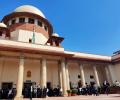
"It is shocking that the Supreme Court is adjudicating bail pleas in cases that should be disposed of at the trial court level. The system is being burdened unnecessarily," Justice Oka said while hearing a bail plea.

The Supreme Court of India has ruled that informing an accused of the grounds for their arrest is not a formality but a mandatory constitutional requirement. The court declared the arrest of Vihaan Kumar, who was accused of financial fraud, as unconstitutional and ordered his immediate release. The ruling emphasizes the importance of procedural safeguards in criminal law and highlights the fundamental rights of arrested individuals. The court also expressed disapproval of the police's treatment of Kumar, including handcuffing and chaining him while he was in the hospital.

The Supreme Court has allowed certified manufacturers to produce green crackers, but restricted their sale in Delhi-NCR without approval. The court has asked the Centre to review the ban on firecracker manufacturing in the region.
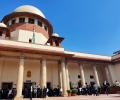
The Supreme Court, in a 2:1 majority, has recalled its previous judgment prohibiting the Centre from granting retrospective environmental clearances to projects violating environmental norms, paving the way for reconsideration of the issue.

The Supreme Court of India has repeatedly criticized the Enforcement Directorate (ED) for exceeding its authority and misusing its powers. The latest rebuke came on Thursday, when the court accused the agency of 'crossing all limits' in a money laundering probe against a Tamil Nadu state-run liquor retailer. This follows a string of similar observations by the Supreme Court and high courts across India, raising concerns about the ED's investigative practices and the potential for misuse of its powers.
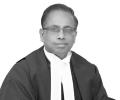
Justice Vishwanathan said he was in "the Common Cause (the NGO which had filed the PIL in coal scam cases). This case was of the ED (Enforcement Directorate), but still...".
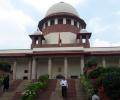
The Enforcement Directorate (ED) faced criticism from the Supreme Court for filing a "half-baked" reply in a bail matter related to the Chhattisgarh liquor scam. The court expressed dissatisfaction with the situation, questioning the accountability of the ED and its advocate-on-record. The ED's additional solicitor general, S.V. Raju, attributed the error to a miscommunication and assured the court that a departmental inquiry would be initiated.

Speaking after laying the foundation stone of the Bombay high court's new complex on land allotted by the Maharashtra government in Mumbai's upscale Bandra area, he noted the mega project was a collaboration between the state and the judiciary to provide modern infrastructure to citizens.
The bench, which also comprised justices AS Oka, JB Pardiwala, Pankaj Mithal and Manoj Misra, pronounced two separate but concurring judgements in the matter.

The Supreme Court of India has asked DMK leader V Senthil Balaji to choose between his ministerial post in Tamil Nadu and his freedom. The court expressed concern over Balaji's reinstatement as a minister despite being granted bail in a money laundering case related to the "cash-for-job" scam. The court fears that Balaji's presence as a minister could influence witnesses in the case. The court has given Balaji until April 28 to make a decision.

A bench of Justices Abhay S Oka and Augustine George Masih, however, refused to interfere with the September 26 order of the apex court granting bail to Balaji on a plea filed by one of the complainants seeking its cancellation.
Three judges, including two high court chief justices, were appointed to the Supreme Court on Thursday.

A group of retired judges has criticized Home Minister Amit Shah's remarks about opposition vice-presidential candidate B Sudershan Reddy and the Salwa Judum judgement, calling them 'unfortunate'.

The Supreme Court collegium has recommended the appointment of Karnataka High Court Chief Justice N V Anjaria, Gauhati High Court Chief Justice Vijay Bishnoi, and Bombay High Court judge Justice A S Chandurkar as judges of the Supreme Court. The five-member collegium, headed by Chief Justice B R Gavai, decided to recommend the names to fill three existing vacancies in the top court. The appointments follow the superannuation of former Chief Justice Sanjiv Khanna, and Justices Abhay S Oka and Hrishikesh Roy. The Supreme Court, which has a sanctioned strength of 34 judges, is currently working with 31 judges.
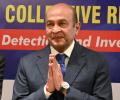
The Supreme Court on Wednesday refused to hear a plea seeking a first information report (FIR) against high court judge Yashwant Varma in connection with the discovery of cash from this official residence in the capital.
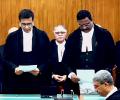
Karnataka high court Chief Justice P B Varale was on Thursday administered the oath of office as a Supreme Court judge by Chief Justice of India Justice D Y Chandrachud in New Delhi.

The Supreme Court granted bail to Abdul Sathar, a former PFI leader, in the 2022 murder of RSS leader Srinivasan in Kerala's Palakkad district. The court stated that there is no direct role attributed to Sathar in the assassination. The Kerala High Court previously granted bail to 17 PFI members accused of instigating communal violence. The NIA is investigating the case.
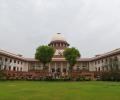
The Supreme Court on Tuesday set aside an order of the Calcutta high court in which it acquitted an accused in a sexual assault case and made 'objectionable' observations advising adolescent girls to 'control sexual urges'.
ISKCON Bangalore had moved the top court on June 2, 2011 challenging the high court's verdict of May 23, 2011.
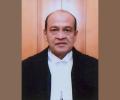
The Supreme Court will hear a plea on Friday seeking a direction to Delhi Police to lodge an FIR over the alleged discovery of semi-burnt stash of cash from the official residence of High Court judge Yashwant Varma. The plea was filed by lawyer Mathews J Nedumpara and three others on Sunday. It challenges the 1991 judgement in the K Veeraswami case, in which the top court ruled that no criminal proceedings could be initiated against a judge of the high court or the top court without the prior nod of the Chief Justice of India. The alleged cash discovery happened following a fire at Varma's Lutyens Delhi residence on March 14, prompting the fire officers to rush to the spot. A Supreme Court-appointed in-house committee visited the residence of Justice Varma on Tuesday to commence its inquiry in the matter. Justice Varma denounced any insinuation and said no cash was ever placed in the storeroom either by him or any of his family members.

The Supreme Court of India expressed shock over a viral video showing an eight-year-old girl fleeing her shanty as it was demolished by a bulldozer during an anti-encroachment drive in Uttar Pradesh. The court mentioned the video while hearing a case concerning illegal demolition in Prayagraj. The incident drew criticism from opposition parties, while local authorities defended the demolition, citing court orders and multiple notices issued to the encroacher.

A bench of Justices Abhay S Oka and Ujjal Bhuyan made the observation while rejecting the plea of a man who had chopped down 454 trees in the protected Taj Trapezium Zone.

The Supreme Court of India has made public the asset details of its judges, including Chief Justice Sanjiv Khanna who has Rs 55.75 lakh in a fixed deposit, a three-bedroom DDA flat in south Delhi, and a four-bedroom apartment measuring 2,446 square feet in the Commonwealth Games Village. The court has also uploaded the complete process of appointments to the high courts and the Supreme Court on its website for public awareness.
The Supreme Court of India has decided to issue a showcause notice to senior advocate Rishi Malhotra, asking why the designation conferred upon him by the apex court should not be revoked. The decision comes in the wake of allegations of misconduct against Malhotra, including suppressing material facts in multiple cases and making misleading statements despite warnings from the court. The full court, convened by Chief Justice Sanjiv Khanna, has decided to give Malhotra one more opportunity to explain his conduct before stripping him of the senior designation. The court has expressed concerns about the effectiveness of the senior designation system and whether it ensures that only deserving advocates are being designated.

The Supreme Court has dismissed a Public Interest Litigation (PIL) seeking the registration of an FIR over the alleged discovery of burnt wads of cash at the official residence of Delhi High Court judge Yashwant Varma. The court said an in-house inquiry was underway and there would be several options open to the Chief Justice of India after the probe's conclusion.
The state's education department told a bench of Justices Abhay S Oka and Pankaj Mithal it was constituting a committee to consider the admission of the victim child to a private CBSE-affiliated school.

The Chief Justice of India (CJI) Sanjiv Khanna has assured bar leaders that he will consider their demand for withdrawal of the collegium's recommendation to transfer Delhi High Court's Justice Yashwant Varma. The decision came after representatives of six bar associations of different high courts met with the CJI and other collegium members. The bar associations are protesting the proposed repatriation of Justice Varma to his parent high court, alleging that the evidence in a fire incident at his residence was tampered with. The bar associations have also raised concerns about the non-registration of an FIR in the incident.
The Supreme Court of India has criticized the Enforcement Directorate (ED) for focusing solely on its own fundamental rights while pursuing a money laundering case related to the Nagrik Apurti Nigam (NAN) scam in Chhattisgarh. The court questioned the agency's attempt to transfer the case to New Delhi, noting that the agency's petition under Article 32 of the Constitution is typically reserved for individuals seeking redressal for fundamental rights violations.

The Supreme Court of India has criticized the Uttar Pradesh government for its "high-handed" demolition of homes in Prayagraj, ordering the reconstruction of the demolished structures. The court expressed concern over the manner in which notices were served and the swiftness of the demolition, stating that it "shocks our conscience." The court has allowed the reconstruction of the homes at the petitioners' expense, provided they file appeals and do not claim ownership of the land. The matter has been adjourned to allow the petitioners to file undertakings.
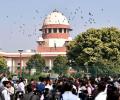
The Supreme Court of India has stayed a Lokpal order that allowed complaints to be filed against a sitting high court judge. The court termed the order "something very, very disturbing" and a concern for the independence of the judiciary. The bench issued notices to the Centre, the Lokpal registrar, and the complainant, directing them to keep the identity of the judge confidential. The court will hear the matter again on March 18.
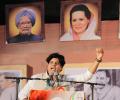
The Supreme Court of India has strongly criticized the police for suppressing freedom of speech by filing FIRs against artists for their performances, stating that mere recitation of a poem, stand-up comedy, or any form of art cannot be alleged to incite hatred or animosity between communities. The court quashed an FIR against Congress MP Imran Pratapgarhi, who was booked for a song performed at a mass marriage function, emphasizing that such actions stifle legitimate expressions of view in a free society.
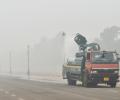
On November 18, the apex court directed all Delhi-NCR states to immediately set up teams to strictly enforce anti-pollution GRAP 4 restrictions, making it clear that the curbs would continue till further orders.

The Supreme Court of India has ordered a progressive reduction in the deputation of Indian Police Service (IPS) officers to Central Armed Police Forces (CAPFs) over the next two years, citing concerns over the delayed promotions of cadre officers. The court's decision aims to address the long-standing grievances of CAPF officers who feel their promotional prospects are hampered by the presence of IPS officers in higher ranks. The ruling also mandates a cadre review of the CAPFs to be completed within six months, addressing the issue of stagnation in the service hierarchy. The court's decision acknowledges the valuable contributions of CAPF officers while also recognizing the need to balance their promotional prospects with the operational requirements of the forces.
